
Western Style Furniture That Still Looks Good in 10 Years: What to Invest In and What to Skip
By Chanda Wahl, Designer Interiors
Western style furniture has a quality problem -- not with the style, but with the market. Walk into any big-box store or scroll through any furnishings site and you'll find plenty of pieces that look the part: distressed wood, leather upholstery, iron hardware, heavy silhouettes. Some of it is well-made. A lot of it isn't. And in a Mountain West home where furniture faces altitude, dry air, temperature swings, heavy use, and long gaps between visits, the difference between a good investment and a regret shows up fast.
After years of furnishing homes in Montana and across the Mountain West, here's what I've learned about what lasts and what doesn't.
The Sofa: Where most people overspend on style and underspend on frame
The sofa is the piece that will either anchor your room for a decade or start to fail quietly within two years. In a second home especially, it's going to be sat on hard, slept on occasionally, and left alone for weeks at a time in a dry, temperature-variable environment.
What to invest in:
A kiln-dried hardwood frame (ask specifically; this matters more than almost anything else)
Eight-way hand-tied springs or a high-density foam seat with a sinuous spring backup
Performance fabric or treated leather that can handle guests, dogs, and the occasional ski boot
What to skip:
Particle board or stapled frames dressed in western style furniture finishes (they look convincing in a showroom and fail within four years)
Trendy silhouettes that will look dated before the frame gives out
Ultra-low profiles (beautiful in photos, miserable to get out of after a long hike)
The sofa is not where to chase a deal. A well-built sofa that fits the room lasts fifteen years. A cheap one lasts three and takes the room down with it. If you're furnishing a second home in Montana, the frame is the first conversation, not the last.
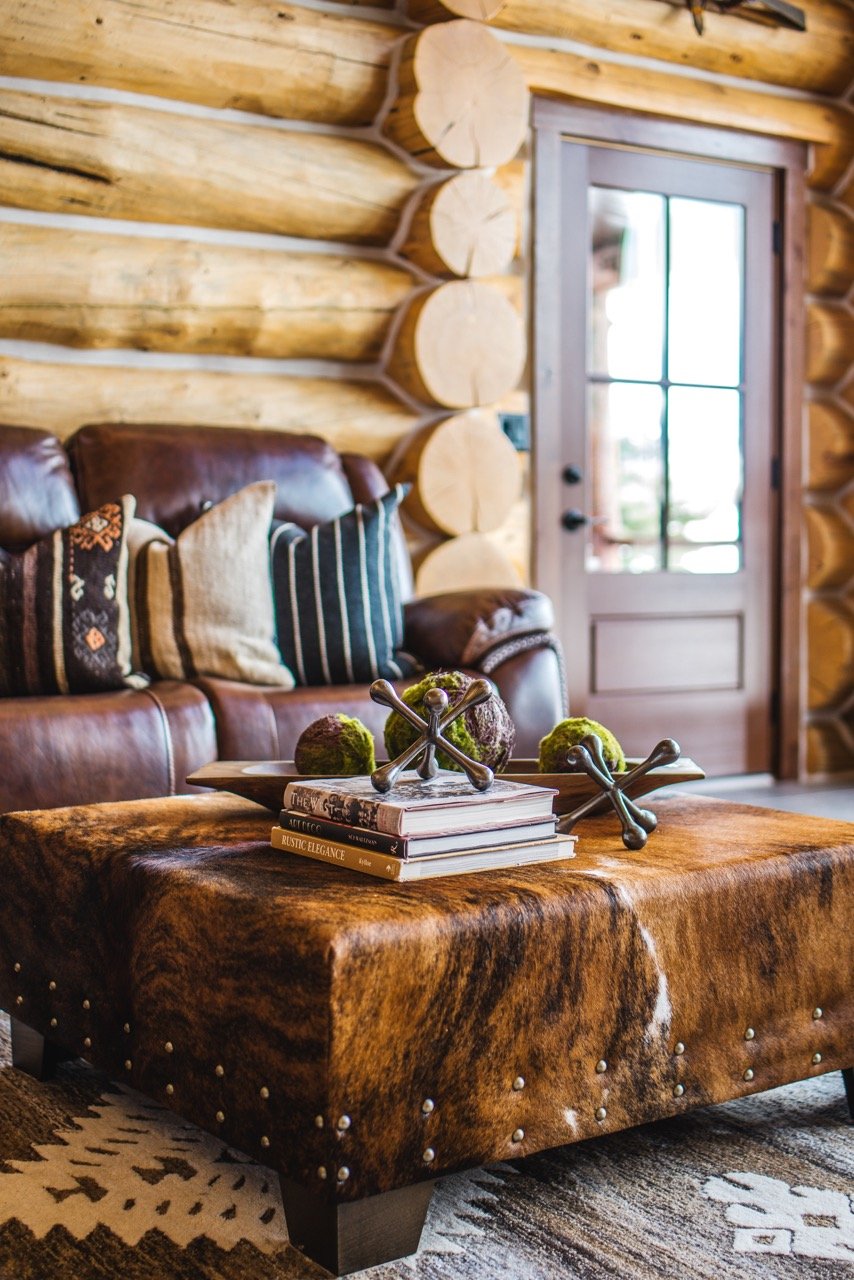
Log Home Lodge
Red Lodge Montana
Dining: Built for Gathering, Not for Show
Dining furniture in a Mountain West home gets used hard. Wet jackets on chair backs. Kids doing puzzles. Adults playing cards until midnight. A dining table that can't take that life isn't the right table.
What to invest in:
Solid wood with a durable finish (oil-rubbed or catalyzed lacquer holds up better than wax in high-use homes)
Extensions that actually work smoothly (a stuck leaf is one of the most frustrating things in a second home when twelve people show up for dinner)
Chairs with tight joinery (the stretchers and legs take enormous stress; look for mortise-and-tenon or reinforced corner blocks)
What to skip:
Veneer tabletops styled to look like reclaimed wood (they won't survive the moisture and dryness cycle of a Mountain West home)
Upholstered dining chairs in anything but performance fabric or treated leather
Glass tops (beautiful, impractical, always smudged)
Solid wood western style furniture for dining is one of the best long-term investments in a Mountain West home. The table your grandparents bought is probably still going. The veneer table from a catalog won't make it to your kids.
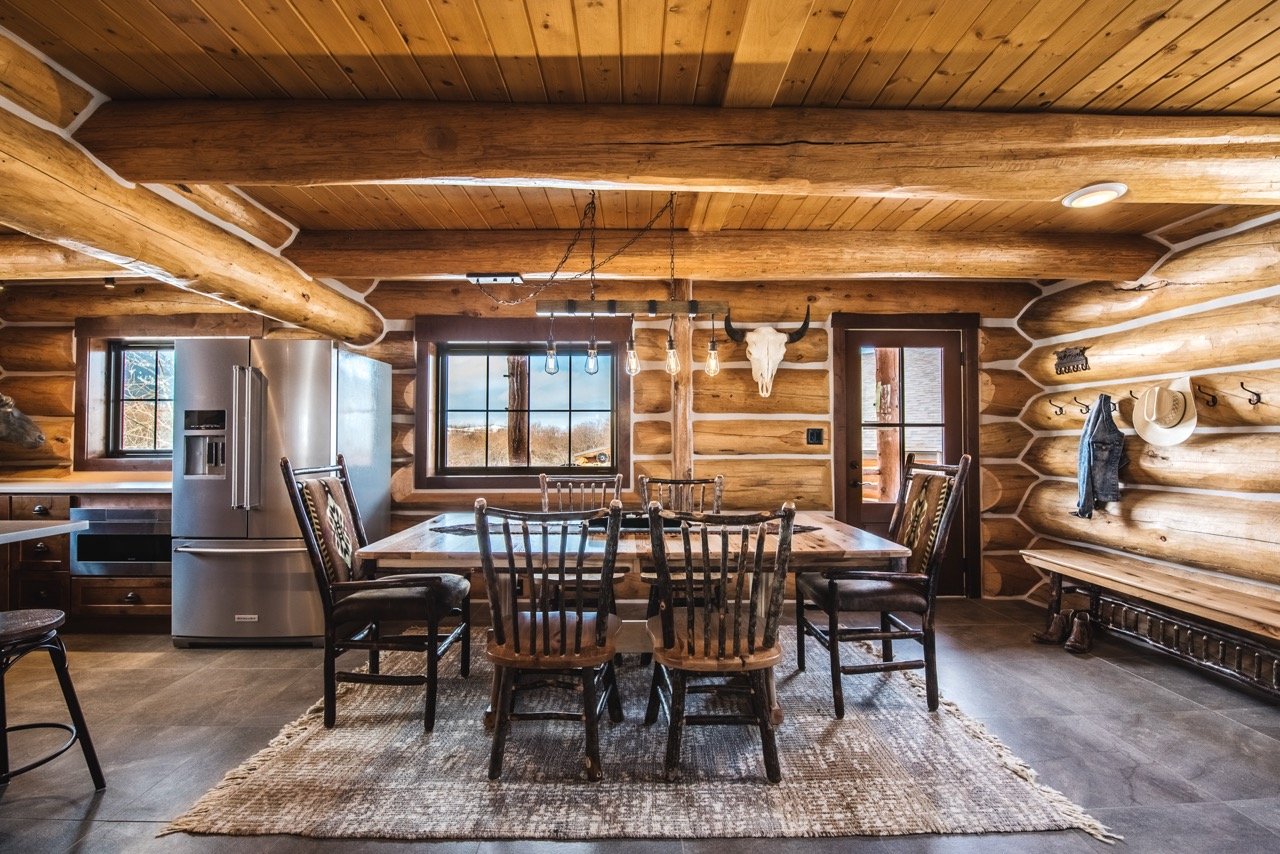
Log Home Lodge
Red Lodge Montana
Bedroom: Where comfort matters more than character
Bedrooms in second homes often get furnished last and on whatever budget is left. That shows. A bedroom that doesn't feel genuinely restful (a mattress that's too soft, a bed frame that creaks, lighting that doesn't work for reading) will be the thing guests and family remember.
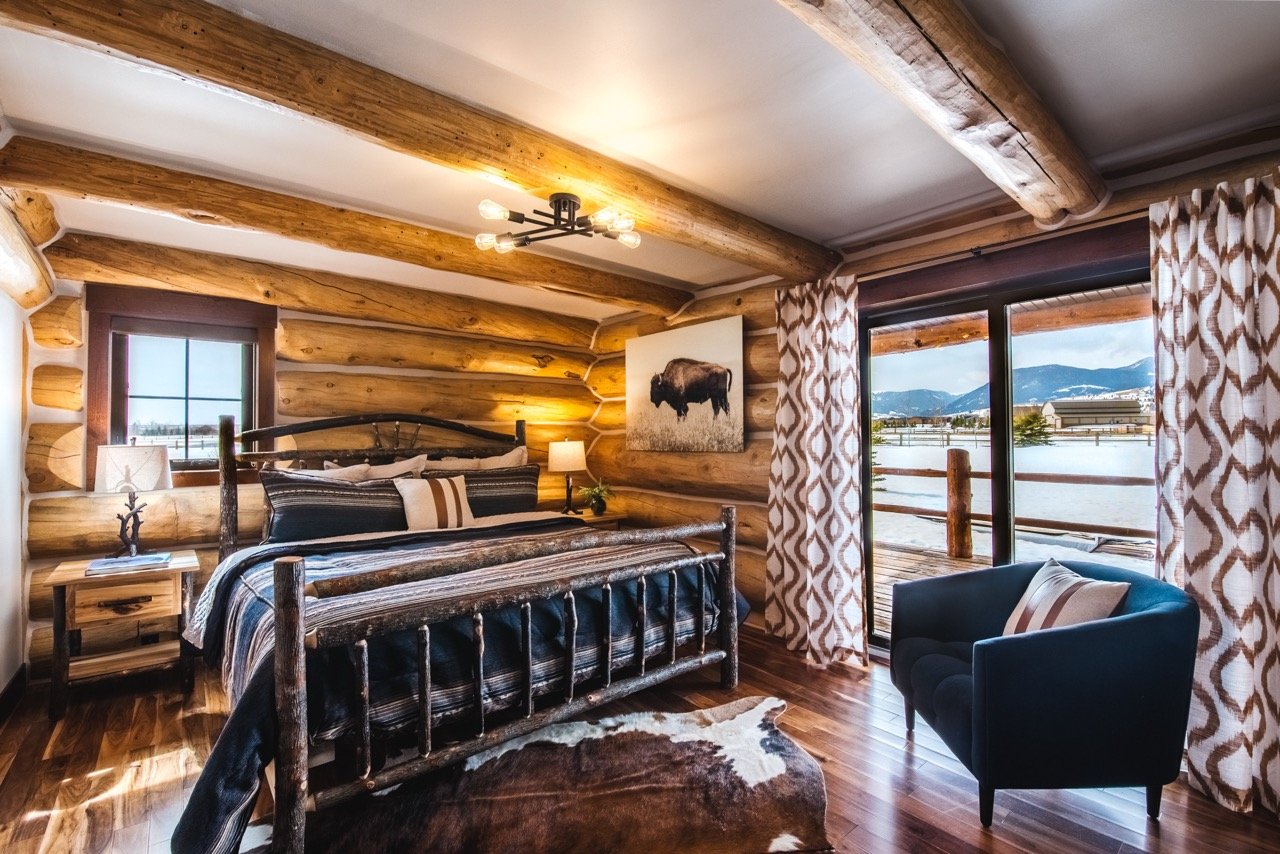
Log Home Lodge
Red Lodge Montana
What to invest in:
A bed frame with a real headboard and solid slat support (no box spring on a thin metal frame)
Bedside tables with a usable surface and a drawer (somewhere to put a phone, a glass of water, a book)
A mattress that actually supports sleep (this is not the place to compromise)
What to skip:
Ornate log bed frames that dominate a small room and make the space feel like a lodge lobby
Nightstands styled as western home decor accent pieces with no practical function
Purely decorative lighting with no reading-level task light
The bedroom isn't a showpiece. Give people a place to sleep well and they'll come back.
Accent Pieces: Edit Hard, Choose Well
Log Home Lodge
Red Lodge Montana
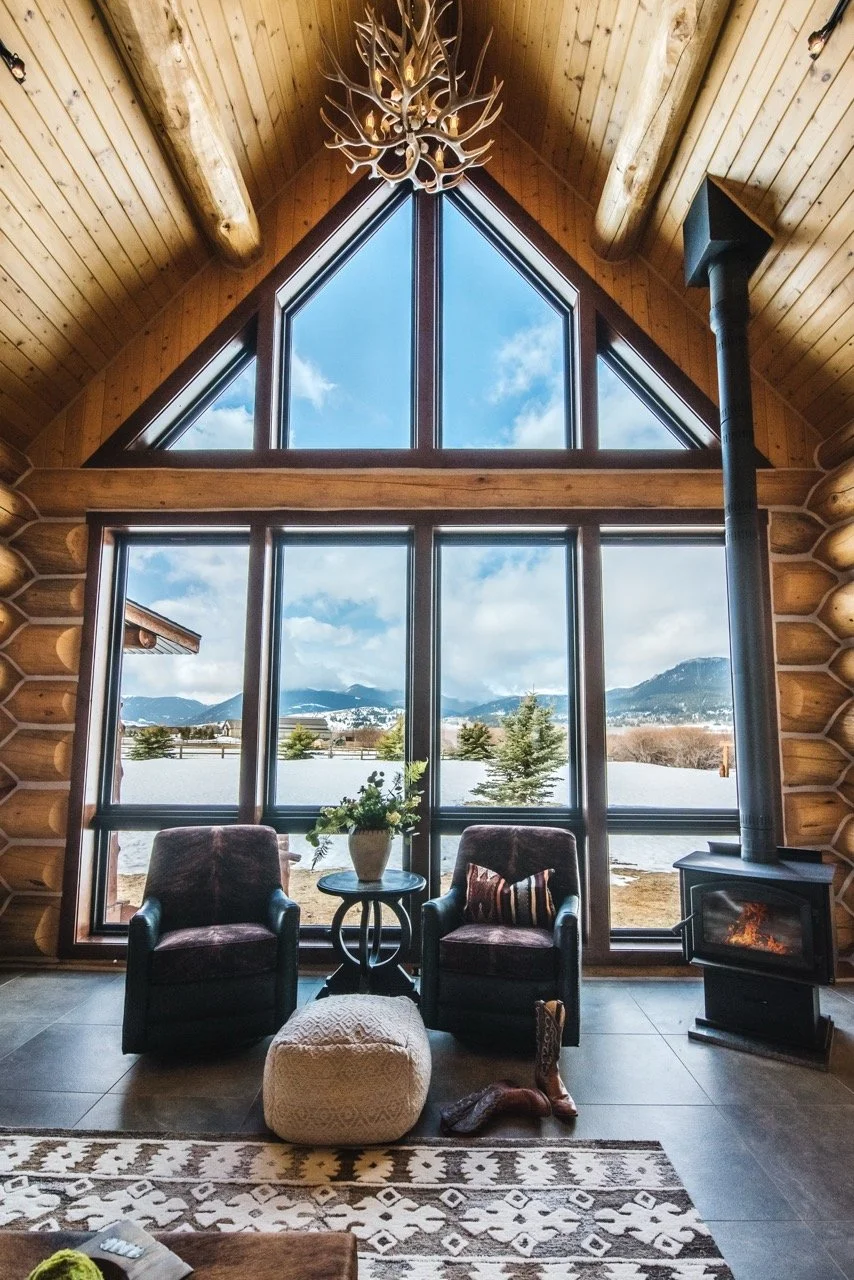
This is where most western style furniture decisions go sideways, not because people buy bad pieces, but because they buy too many of them. An accent chair no one ever sits in. A console that holds things no one needs. A bench at the foot of the bed that functions as a clothes pile.
What to invest in:
One genuinely comfortable accent chair per seating area (something people actually choose to sit in)
A console or entry piece with real storage utility
A bench or ottoman that pulls double duty: seating and surface
What to skip:
Pieces bought purely for their western aesthetic with no functional purpose
Anything with a short life span dressed up as vintage or reclaimed
Multiples of the same silhouette (two leather chairs plus a leather sofa plus a leather ottoman is too much; vary the materials)
At Designer Interiors, we push clients to cut their accent furniture list by a third before purchasing. What's left is almost always stronger for it.
The Material Question: What Montana does to furniture
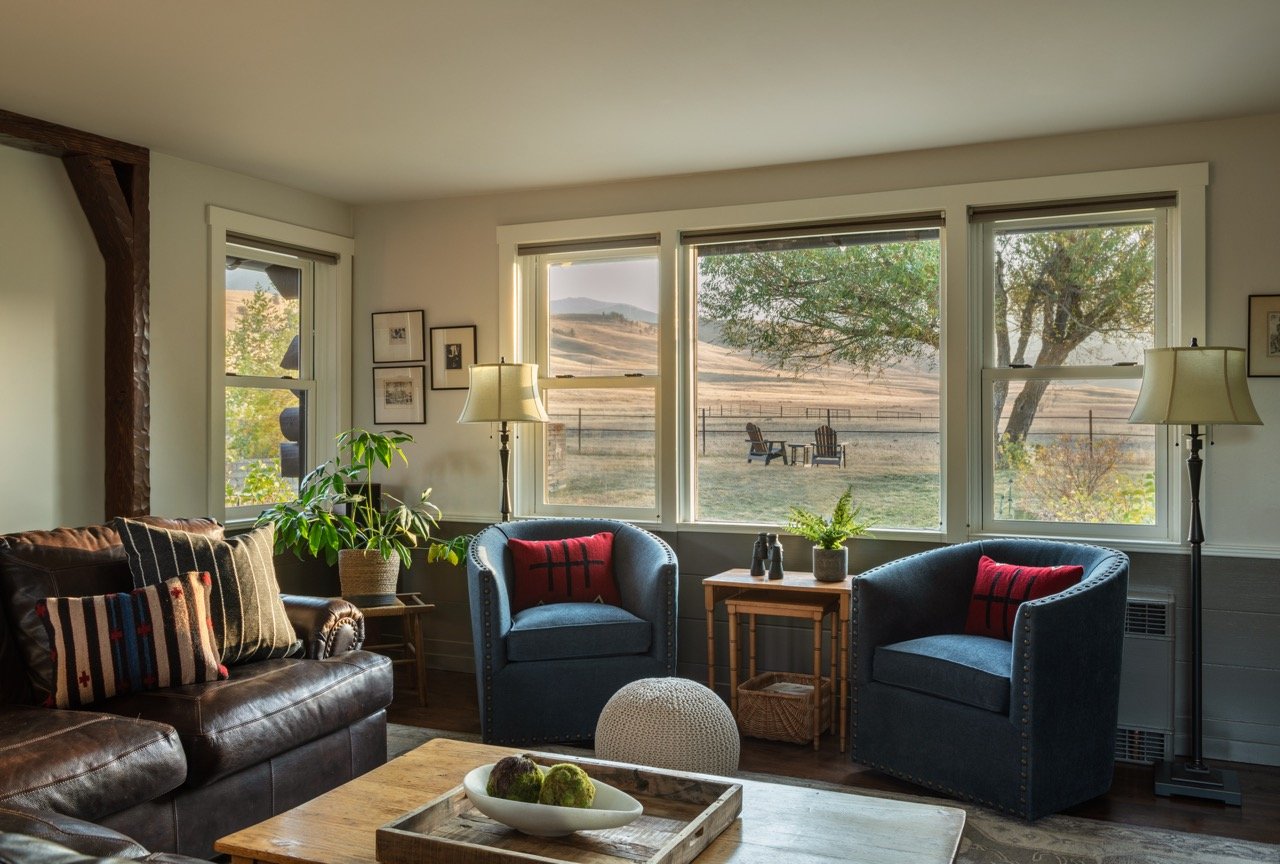
Mountain West conditions are harder on furniture than most people expect. High altitude means intense UV exposure, and fabrics and wood finishes fade faster than at lower elevations. Low humidity in winter dries out wood and leather. Temperature swings between a cold, unoccupied house and a heated one stress joints and frames. You can see how those conditions play out in real homes in our Western Roots project, a log home where every material choice had to hold up to exactly this kind of environment.
Western Roots
Roscoe, Montana
Materials that hold up:
Leather treated for dry conditions (condition it twice a year and it lasts decades)
Performance fabrics rated for high UV and abrasion
Solid wood with a catalyzed or oil finish, not wax, which requires constant maintenance
Metal with a powder coat or oil-rubbed finish rather than bare or lightly sealed
Materials that don't:
Untreated or lightly finished wood that will dry, crack, and split
Cheap leather that dries out and peels within two or three years
Fabric that isn't rated for UV (it will fade noticeably within one summer at altitude)
When to ask for help
Furnishing a Mountain West home well is genuinely difficult to do from a distance, which is why so many second-home owners end up with spaces that don't quite work. The scale is different, the conditions are different, and the use patterns are different from a primary residence.
Working with interior designers Montana homeowners already trust means you get guidance on specific pieces, not just style direction, before you buy something that won't hold up or won't fit the room.

At Designer Interiors, we help clients build a furniture plan that fits the space, fits how they actually use the home, and holds up over time. If you're furnishing a new home or replacing pieces that aren't working, we'd be glad to help you get it right the first time.
