
What "always ready" means in a Montana second home
By Chanda Wahl, Designer Interiors
There's a moment every second-home owner knows. You've driven four hours, or flown in from another time zone, or made the last leg of the trip in the dark. You open the door. And the house either welcomes you or it doesn't.
Not in a sentimental way. In a practical one. Is there somewhere to put your bags? Does the light come on at the right level for this time of night? Is the entry clear, the heat already on, the kitchen clean enough that you could pour a drink without moving anything first?
That moment, what I think of as the arrival test, is the real measure of Montana home design done well. Not the photos. The first five minutes.
What "always ready" isn't
Log Home Lodge
Red Lodge Montana
Most people interpret always-ready as a maintenance standard. The house is clean. The beds are made. The laundry is done. Those things matter, but they're not design decisions. They're habits.
What design controls is whether the house enables that state easily, or fights it constantly.
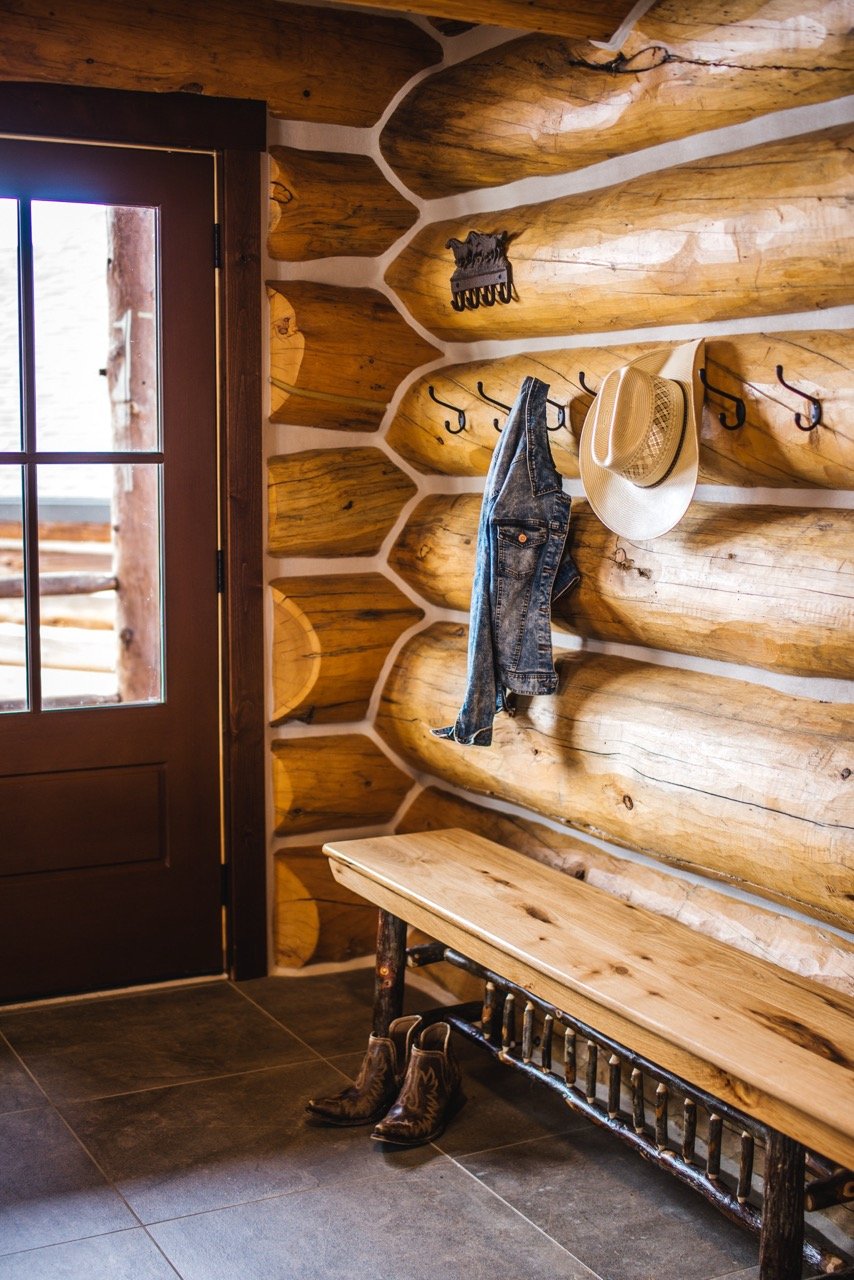
A mudroom without enough hooks means coats end up on dining chairs. A kitchen with no obvious home for things-in-progress means clutter accumulates on every flat surface. A great room with one overhead light feels cold after dark no matter how clean it is. These aren't cleaning problems. They're design problems. And no amount of effort from a caretaker fixes them permanently.
The Log Home Lodge: A study in arrival
One of the projects we're most proud of at Designer Interiors is a log home in the Mountain West, a space that was, before our involvement, beautiful in photographs and exhausting in person. Strong bones. Striking views. And a perpetual list of things to sort out before it felt right.
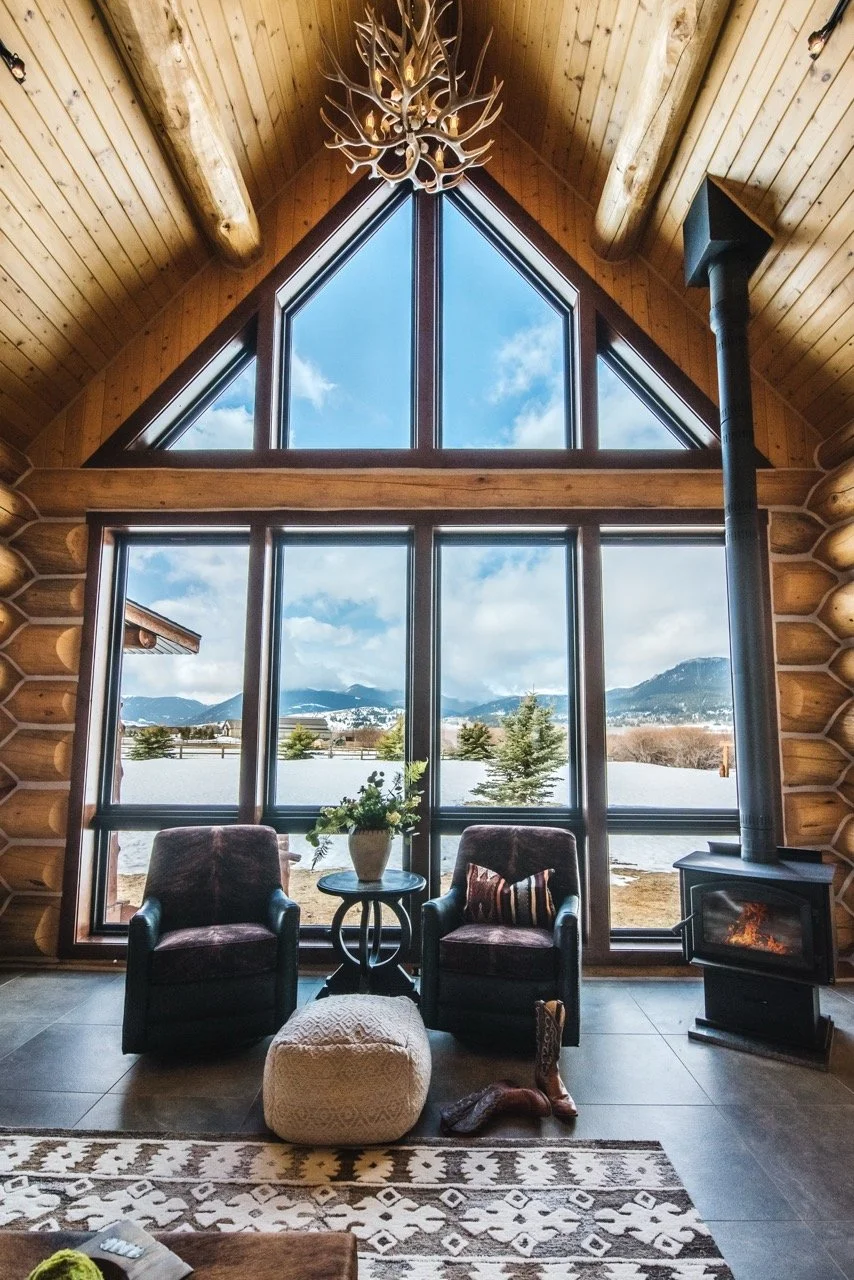
The issues weren't dramatic. There was no dedicated landing zone at the entry, so coats and bags dispersed across the house. The living room had one light source, so the room went flat the moment winter darkness arrived. The guest rooms looked finished but had nowhere obvious to put luggage, so guests piled things on beds and chairs. Small frictions, compounded across every visit.
What mountain modern interior design allowed us to do in that space was build systems into the structure, not add them on top of it. Entry hooks, a bench, and a console that made the arrival sequence feel resolved rather than improvised. Layered lighting that meant the flick of one switch warmed the whole room. Guest rooms with purpose-built luggage space and enough surface area that a guest could settle in without creating chaos.
The house didn't change dramatically in how it looked. It changed dramatically in how it felt to arrive.

Log Home Lodge
Red Lodge Montana
The decisions that create always-ready
Always-ready is built from a small number of high-use design decisions. Here are the ones that matter most.
Log Home Lodge
Red Lodge Montana
The entry sequence. Somewhere for coats, bags, and boots that doesn't require a decision. A hook, a bench, a basket, whatever fits the architecture. If people have to figure out where things go, they won't put them away.
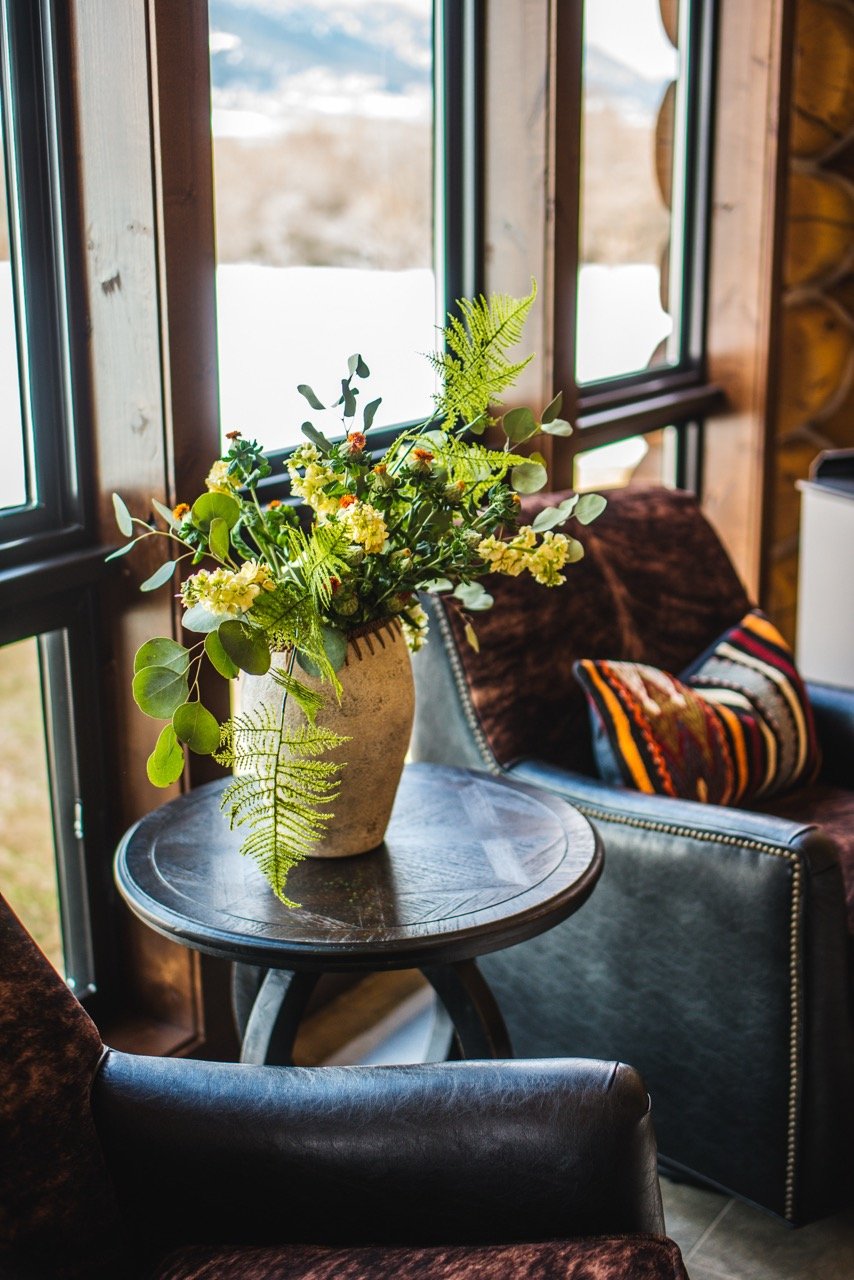
Lighting that responds to the hour. A room that works at noon and at 9 PM is a designed room. That means an overhead or architectural source, a mid-layer for warmth (sconces, picture lights), and table and floor lamps near every seat. Montana winters are long. The room needs to hold up when the light goes.
Clean reset logic in every room. The bedroom should have a clear surface for nightstand items and a place for luggage that isn't the bed or the floor. The kitchen should have a landing zone that cleaners can reset in under ten minutes. The great room should have a cabinet or console where the games, remotes, and chargers live, visibly stored, not hidden behind a door that no guest will open.
Materials that age without maintenance anxiety. A rug that shows every dog hair creates low-grade stress every time someone sits down. Surfaces that require constant conditioning, waxing, or protecting turn the home into a job. Montana home design that lasts chooses materials based on how they perform over years, not how they look in a showroom.back.
Why this is a design question, not a cleaning question
The homes that feel always-ready weren't cleaned better. They were designed better. The decisions happened at the planning stage, when the mudroom was being laid out, when the furniture plan was being written, when the lighting was specified. That's when you can build arrival logic into the house rather than working around its absence later.
Working with interior designers Montana homeowners trust means having someone ask these questions before the floor plan is final: Where will people put their things when they walk in? What does this room feel like at 9 PM in January? What happens to this surface when guests are here?
Log Home Lodge
Red Lodge Montana

At Designer Interiors, the arrival test is something we design for. Not as an afterthought, as a primary brief. Because a home that welcomes you reliably is a home you come back to.
