
Lighting in Montana Home Design: How to Make Your Western Second Home Feel Warm All Year
By Chanda Wahl, Designer Interiors

When Big Windows Aren't Enough
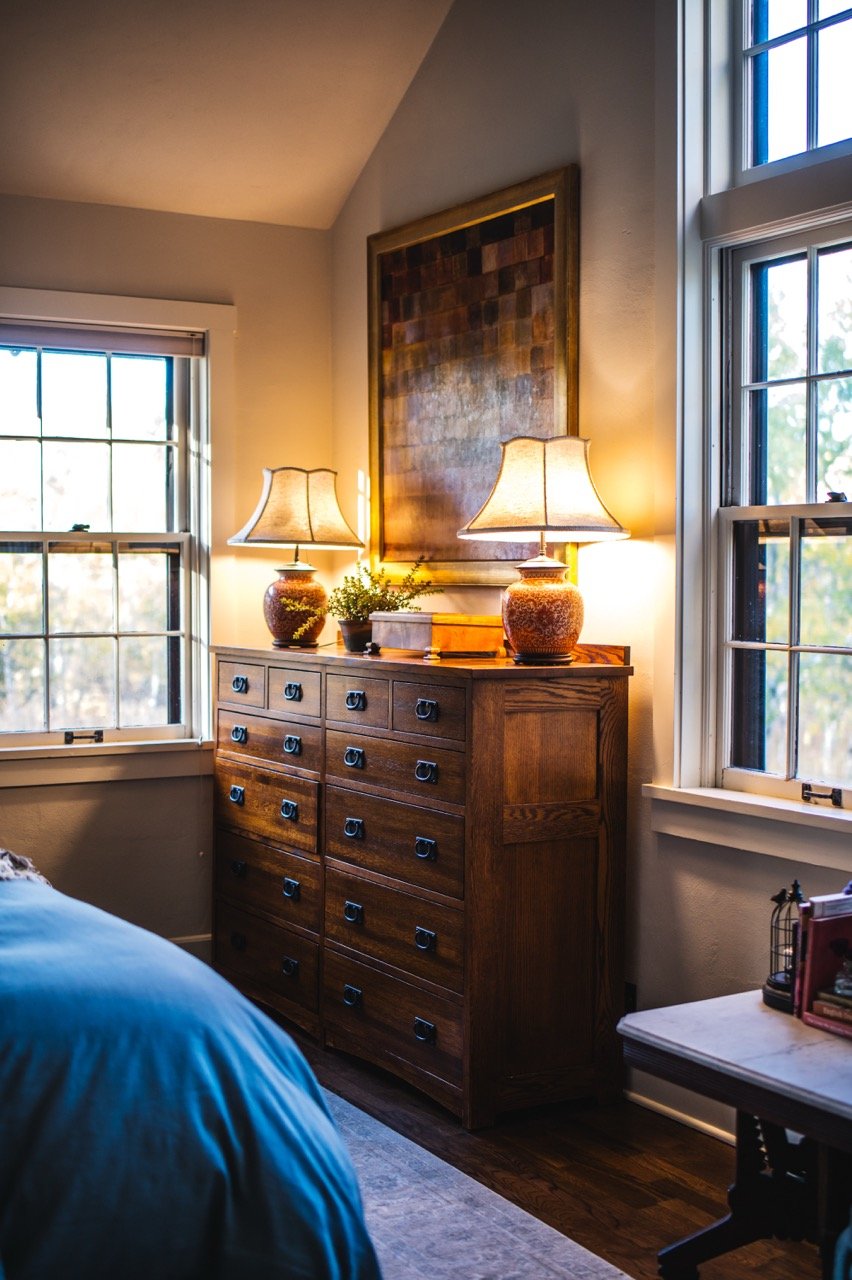
Many Montana and Mountain West homes are designed around the view: walls of glass, high ceilings, open plans. On a bright day, it feels amazing.
Then winter hits. The sun drops early. Storms roll in. You arrive late on a Friday night after a long drive or flight, and suddenly the house feels:
Too harshly lit in some spots
Too dim and shadowy in others
A little colder and emptier than you imagined
The architecture is right. The finishes are right. But the light isn't matching how you use the house.
In a climate with big sky, long winters, and real second-home rhythms, lighting isn't a finishing touch. It's a core part of Montana home design, one that can turn a dramatic house into a place that feels warm and settled, or make it feel off.
Western Light Behaves Differently
Designing lighting here starts with respecting how Western light works:
High and sharp sun: strong glare through large windows at certain times of day.
Long shadows and early dark in fall and winter.
Big swings between strong brightness and low, flat gray.
In a second home, you often experience the extremes: holiday weeks, ski trips, stormy weekends, shoulder seasons.
If your lighting plan only works for sunny July afternoons, you'll feel it in January.
Thoughtful montana home design asks:
What does this room feel like at 8 a.m. on a gray winter morning?
What does it feel like at 6 p.m. in December when people are just coming in from the car?
How does it feel after dinner when you want the house to wind down with you?
Once you start asking those questions, the decisions you make about fixtures, placement, and control shift.
Lighting the Great Room and Living Spaces
The great room in a Western home usually matters most. It's where you gather, look out, and remember why you came.
To support that, you want three layers of light working together:
Ambient Light
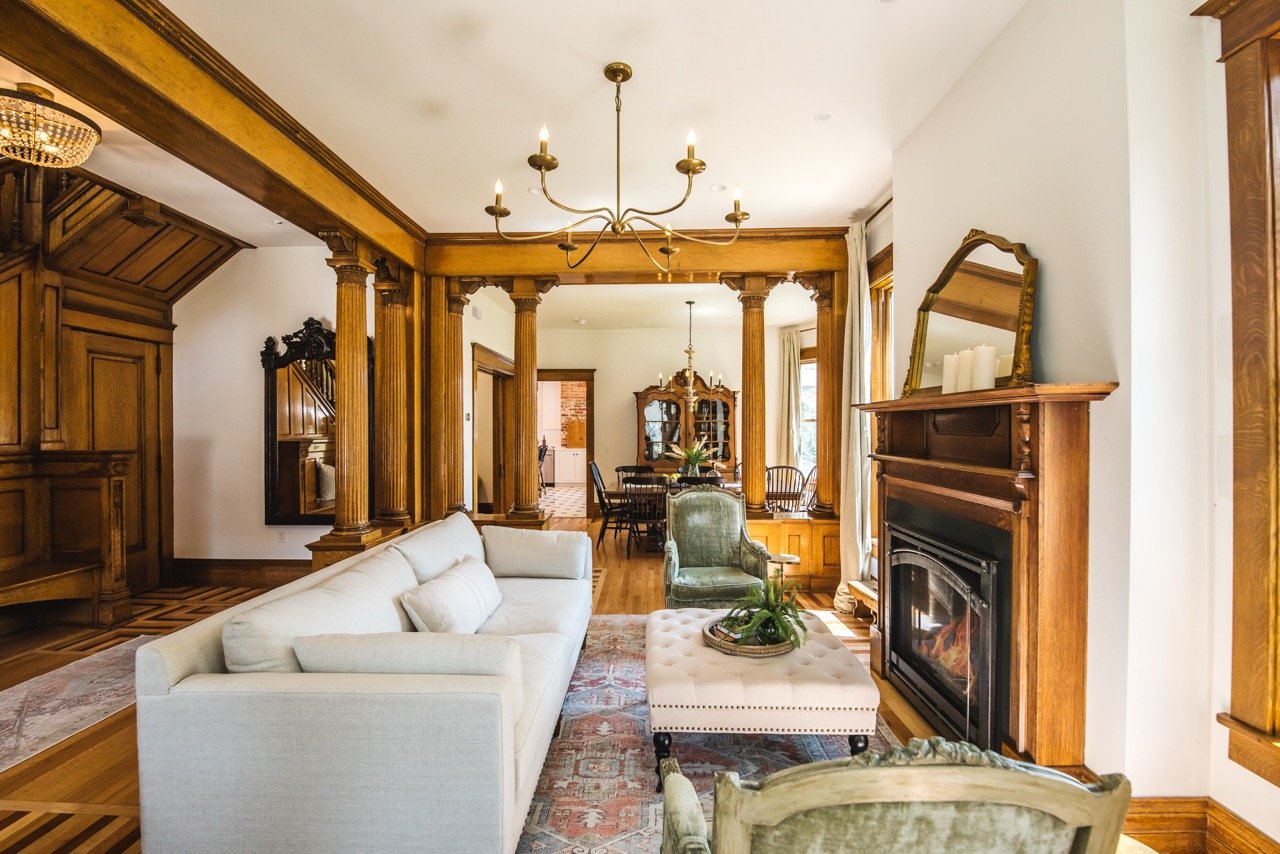
This is the overall wash, often recessed lights or ceiling fixtures, that keeps the room usable. In a space with tall ceilings, it needs to be:
Warm enough in color temperature that evenings feel inviting, not clinical
Controllable, ideally on dimmers and in zones so you're not stuck with "all on" or "all off"
2. Task Light
This is light for specific things:
Reading chairs with lamps at the right height
A table lamp on a console where you drop keys or pour a drink
A floor lamp near a game table or sectional
Task light is what keeps people from migrating to their phones just because they can't see a book or a board game.
3. Accent Light
This is what makes the room feel balanced:
Wall sconces by the fireplace or along timber posts
Picture lights on art
Small, low-wattage fixtures that give the room glow even when the main lights are down
In well-designed modern rustic interiors and mountain modern interior design, these three layers support each other. The room can move from bright and energized to soft and calm without ever feeling like a cave or a showroom.
Entries, Mudrooms, and Late-Night Arrivals
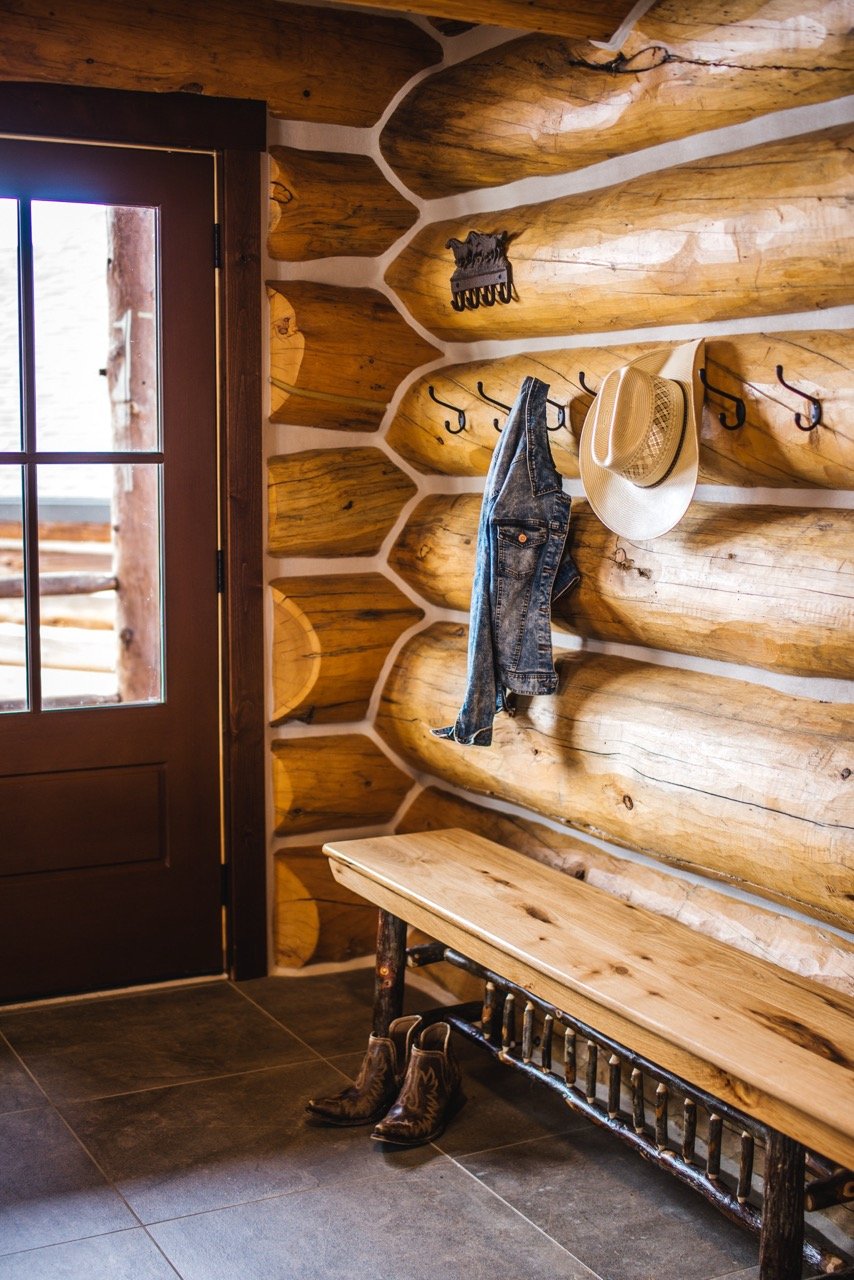
For a second home, the first five minutes inside set the tone for the entire stay.
Good lighting at entries and mudrooms means:
You can instantly see where bags, coats, and boots go
People aren't tripping over gear or feeling around for switches
The house feels welcoming even if you arrive in a snowstorm
Here, functional choices matter as much as mood:
Fixtures and finishes that can handle moisture and mud
Enough light to clean easily and to notice when something's out of place
Switches where you naturally reach for them, not halfway across the room
These are small decisions, but they're exactly the kind that make rustic interior design feel practical without feeling cold.
Bedrooms and Guest Spaces That Actually Rest
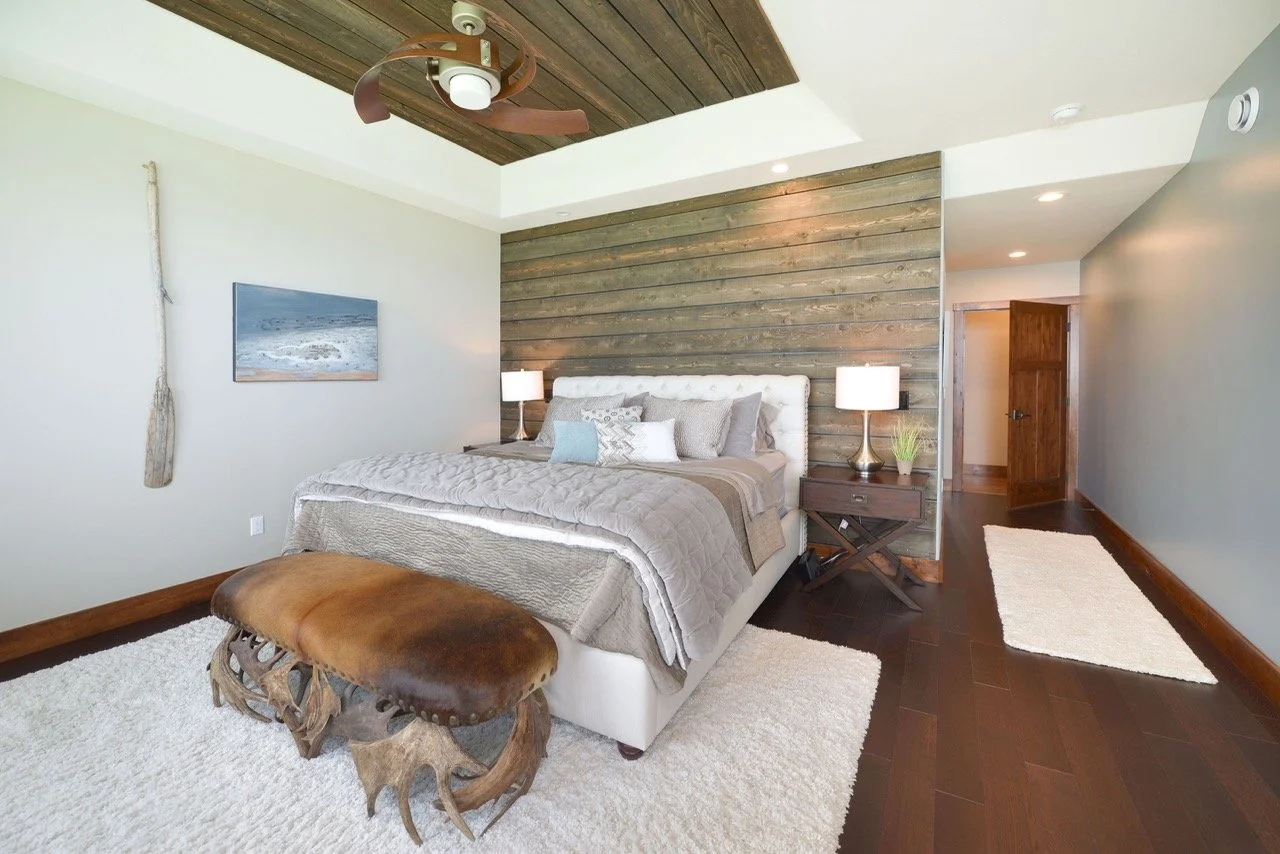
In bedrooms and guest suites, you're balancing two things:
The desire to wake up connected to the land outside
The need to actually sleep, read, and relax without glare or frustration
A few simple moves make a big difference:
Layered window treatments: sheers to soften daylight, blackout options for sleep
Bedside lighting you can control from under the covers, on both sides of the bed
Soft, warm general light so evenings feel calm, not like a hotel lobby
For bunk rooms and guest suites, this matters even more. Guests remember how they slept and how easy it was to use the space. Lighting that supports that makes your home feel more like a boutique stay than an overflow room, which is what we aim for when we design guest spaces in Western second homes.
Smart Lighting Upgrades for Existing Homes
If your house is already built, you don't have to start over to notice a real difference. A few focused moves can noticeably improve the house:
Add or upgrade lamps in your main living spaces and bedrooms. Aim for at least one at every main seat.
Install dimmers in the great room, dining area, and primary bedroom so you can tune light level to time of day and mood.
Swap a few key fixtures that are either too bright, too cold, or simply in the wrong place.
When we're called in to work on existing montana home design projects, we often start with lighting because:
It affects everything else in the room
It's more affordable and less invasive than structural changes
It directly affects how welcoming the house feels the moment you walk in
When to Bring in a Designer to Rethink Lighting
If you've ever thought, "This house looks right but doesn't feel right at night," lighting is probably a big part of the reason.
A good interior designer near me who understands Western second homes will:
Evaluate how each room feels at different times of day and in different seasons
Build a layered lighting plan that supports how you really use the house
Coordinate fixtures, finishes, and control so it all feels planned, not random
Designers who live and work in this landscape, interior designers Montana homeowners already trust, know how to design for big sky and long winters, not just for a styled photo shoot in July.
At Designer Interiors, we treat lighting as one of the main ways we turn well-built houses into homes that feel warm and settled.

If you're ready for your Montana home to feel as warm and welcoming on a stormy January night as it does on a bluebird day, we'd love to help you see what the right light can do.
Contact Designer Interiors to start your Montana home design journey
