
By Chanda Wahl, Designer Interiors
The Seaside Serenity residence sits at the edge of a Kenai inlet. When the clients brought us in, the brief for the bedroom was simple: the water is right there. Don't ruin it.
That's the real challenge of coastal interior design. Not creating something beautiful, creating something that knows when to get out of the way.
What most bedrooms get wrong
Bedroom design usually starts with the bed. Then the storage. Then the lighting. The view comes last, if it comes at all, treated as backdrop, something to acknowledge with a well-placed mirror or a piece of wall art.
That's the wrong order. And in a room with a view like this one, the consequences are immediate. You end up with a beautifully furnished bedroom that you have to look past to see what you came for.
The version of this that fails looks like a lot of intentional coastal bedrooms: blue-and-white stripes, rope accents, driftwood sculptures arranged on every surface. The room is so busy announcing itself as coastal that the real water outside the window becomes secondary. It's noise when the brief called for silence.
Seaside Serenity
Kenai, Alaska
What coastal interior design requires
When a room has something worth looking at, every other decision should serve it. The furniture, the materials, the layout, the lighting, all of it exists to keep attention where it belongs.
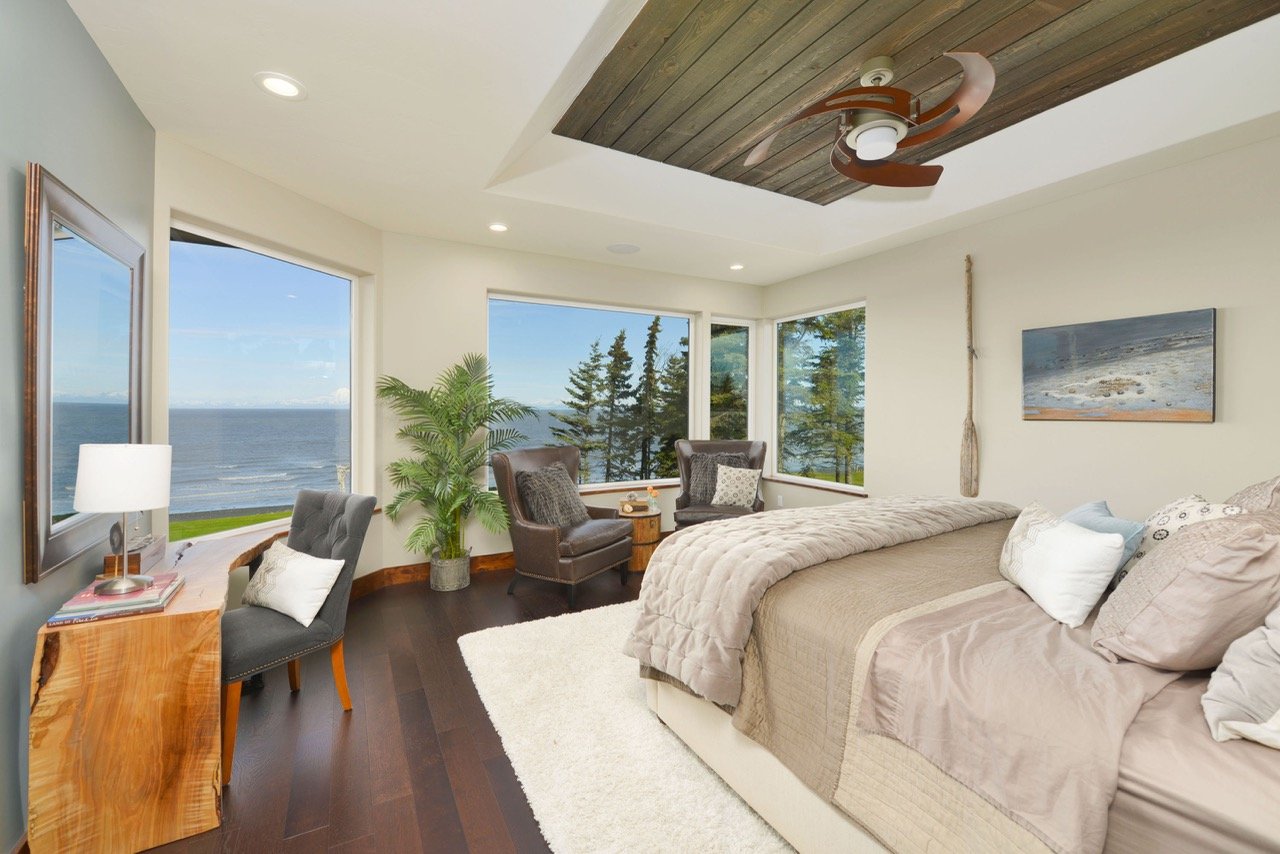
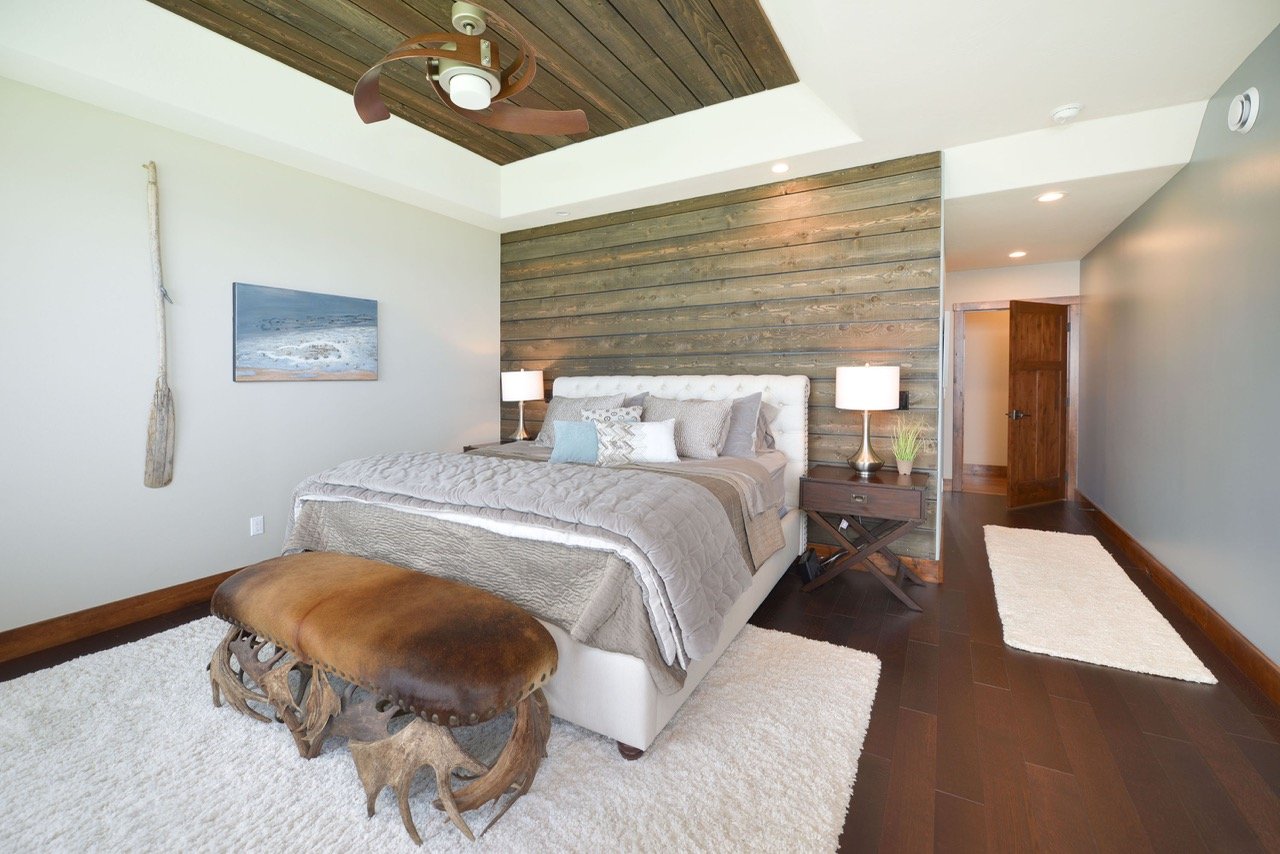
That meant a material palette pulled from the landscape itself. Reclaimed wood planks on the accent wall, weathered gray-green, the color of coastal driftwood after a season exposed to the elements. The same reclaimed wood carries into the tray ceiling. None of it is a reference to the water. It's a continuation of the same world.
The antler and cowhide bench at the foot of the bed brings natural texture without visual weight. The live-edge desk floats in front of the window, not blocking the view but giving it a foreground, something to look past before the eye reaches the inlet. Two leather chairs face the water at an angle designed for exactly that: sitting, looking, staying a while.
The vintage oar against the wall doesn't decorate the room. It marks it. There's a difference between a room that references a place and a room that belongs to one.
Seaside Serenity
Kenai, Alaska
The Project: Seaside Serenity, Kenai, Alaska
Seaside Serenity
Kenai, Alaska
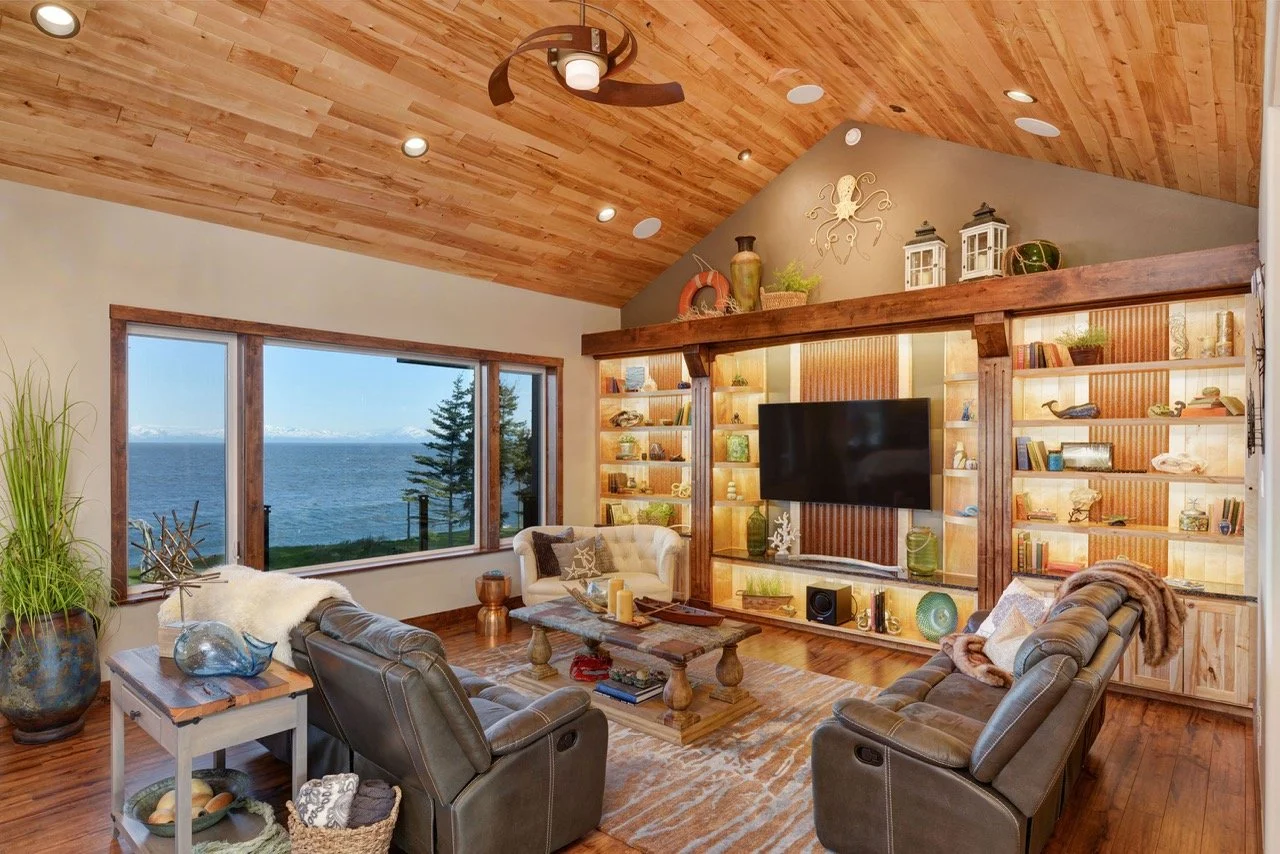
This oceanfront residence was designed as a retreat, a place to arrive and exhale. Alaska interior design asks for something most projects don't: the discipline to let the landscape lead. In a room competing with nothing, you can afford to be quiet. In a room competing with an Alaskan inlet, quiet is the only option.
Floor-to-ceiling windows face the water and the spruce trees beyond it. The palette holds steady throughout: white bedding, silver-gray layering, warm wood, soft white underfoot. Nothing competes for attention because nothing needs to.
At Designer Interiors, we work on destination properties across the Mountain West and coastal Alaska. The firm is based in Red Lodge, Montana, but the question we bring to every project is the same regardless of geography: what does this place want to be, and how do we help it get there? In Kenai, the answer was the view. Every decision in this room follows from that.
Five decisions that made this room work
Seaside Serenity
Kenai, Alaska
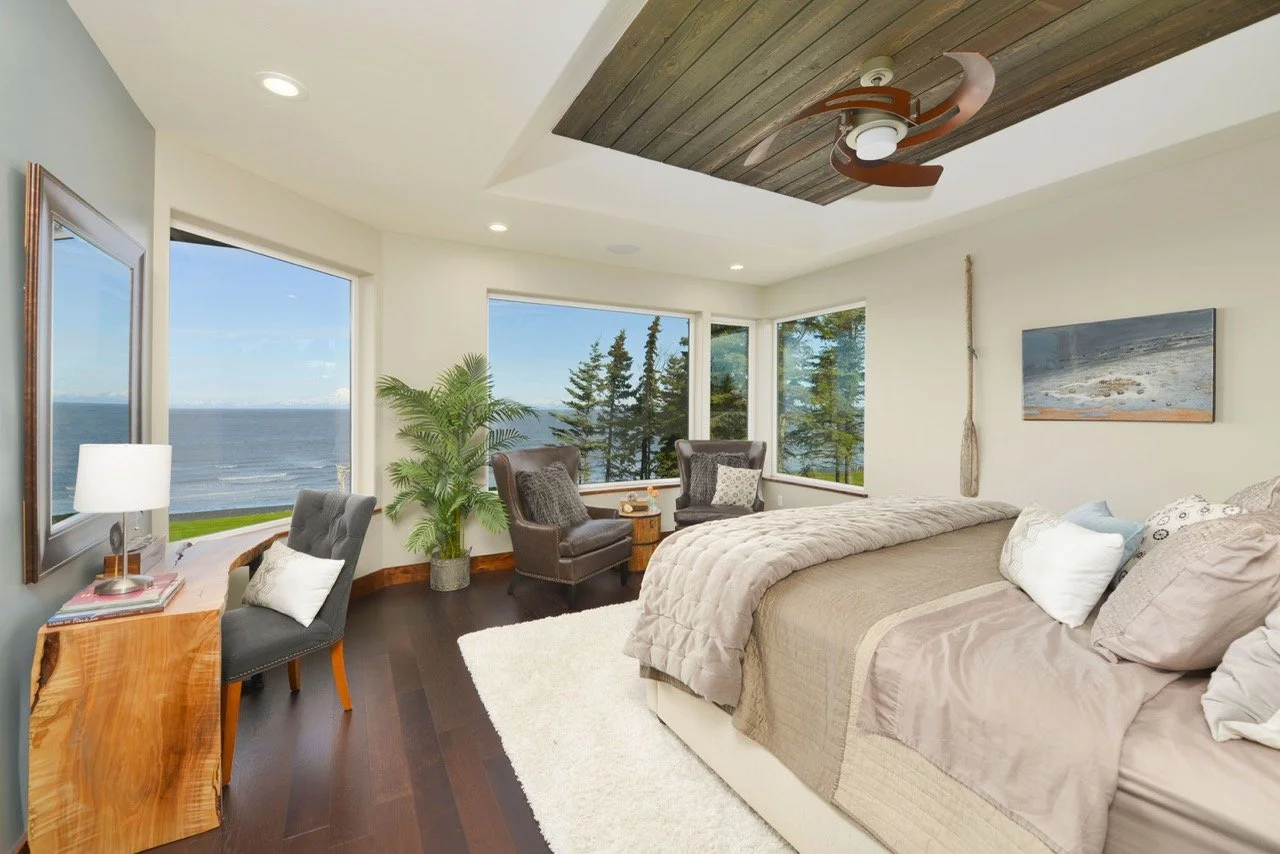
Face the windows, not the wall. The sitting area is angled toward the water, not toward the bed. Clients often resist this, it feels counterintuitive to put the seating away from the room's center. But a bedroom with a view isn't a room organized around itself. The layout assumes you'll want to look out before you sleep and again when you wake up.
Use materials that belong to the landscape. Reclaimed wood, cowhide, natural fiber. Not because they're "coastal," because they're honest. Everything in this room has a reference point outside the window, so the room feels continuous with where it is rather than placed inside it.
Keep the palette quiet. Warm neutrals, soft whites, muted grays. Nothing pulls the eye away from the water. The instinct to bring in color, to make the room interesting, is the instinct to compete with the view. Coastal interior design that works doesn't try to be as interesting as the landscape. It lets the landscape be interesting.
Give the view a middle ground. The live-edge desk in front of the window creates depth. There's something to look past before the eye reaches the inlet. Without it, the view can feel flat, exposed rather than framed. A single object at the right scale and position changes what you see and how long you look at it.
One meaningful object, not many. The vintage oar earns its place because it's specific and honest. It says something true about this place and the people who live here. One object like that is worth more than a full wall of carefully curated coastal art. The difference is the difference between a room that tells a story and a room that performs one.
When to call a designer
These decisions look simple in retrospect. They almost never feel simple in the moment, especially when you're working on a vacation property you can only visit occasionally, in a landscape you're still learning to read.
If you own a second home or destination property in coastal Alaska or the Mountain West and the view is the best thing about it, at Designer Interiors we'd be glad to take a look. The right Alaska interior designer doesn't bring a style to a room. They figure out what the room already knows about itself and build from there.
